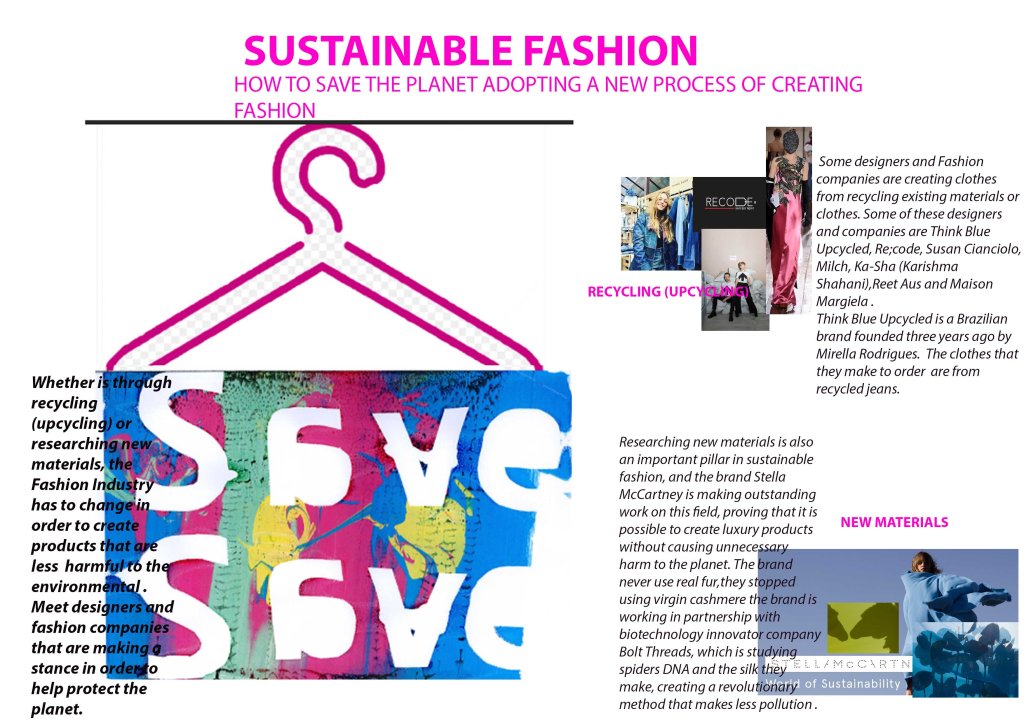
Before I create my editorial, I already knew what theme I want to choose. As my mood board was about sustainable Fashion, I wanted to create an editorial with the same theme, with focus on recycling (upcycling) and the research for new materials.
Regarding to recycling (upcycling) I research some brands that create clothes from recycling existing materials or clothes. Some of these brands are Think Blue Upcycled, Re;code, Susan Cianciolo, Milch, Ka-Sha (Karishma Shahani),Reet Aus and Maison Margiela .
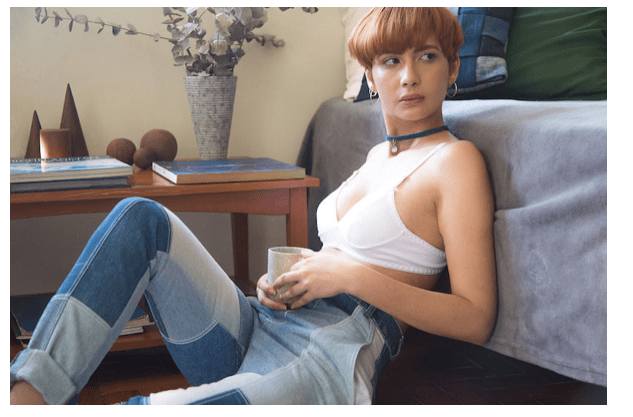
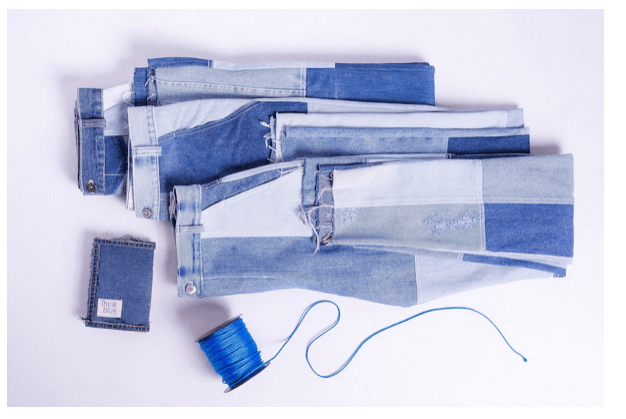
Think Blue Upcycled is a Brazilian brand founded three years ago by Mirella Rodrigues. After graduating and noticing the enormous quantity of jeans in the nearby bazaars (charity shops) and taking into account how polluting and easily disposable the fabric used to make them is, Mirella decided that instead of buying new denim, she would recycle the existing ones (from the jeans) to make new garments. To new garments are made to order. To make the public aware of the importance of rethinking the fashion process, the brand informs their customers on the quantity of water used in each piece, how many pairs of jeans were needed to create it and how many hours the dressmaker took to cut it and sew it.
As someone who wants to focus my studies and future career on sustainability in Fashion, I got inspired by this brand because of the use of found fabric (jeans) which is something that I can easily find (and use) at the college to create my own garments. Also it is a recent brand with few employees whose main focus is to inform the public about the importance of slow and ethical fashion. Another thing that got my attention is the transparency of the brand, they inform the public where they source their material and all the creative process of the garment which, hopefully, will make the consumers think on how many time and work was put in the making of a single garment and how harmful is to nature when they just throw it away.
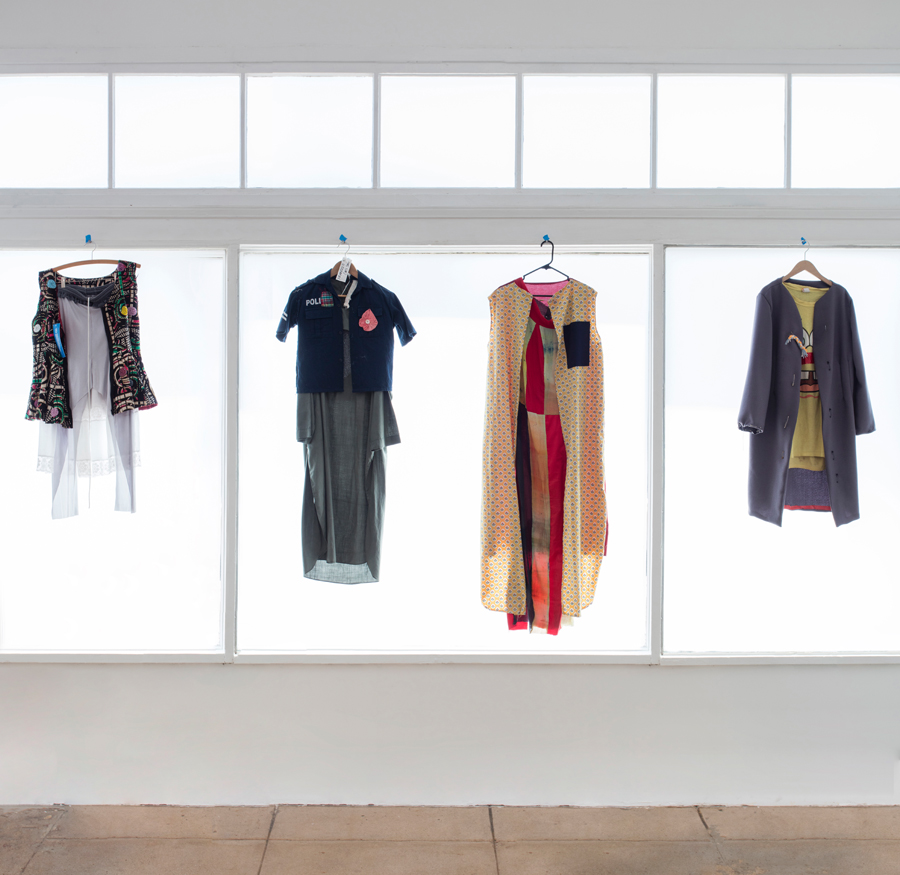
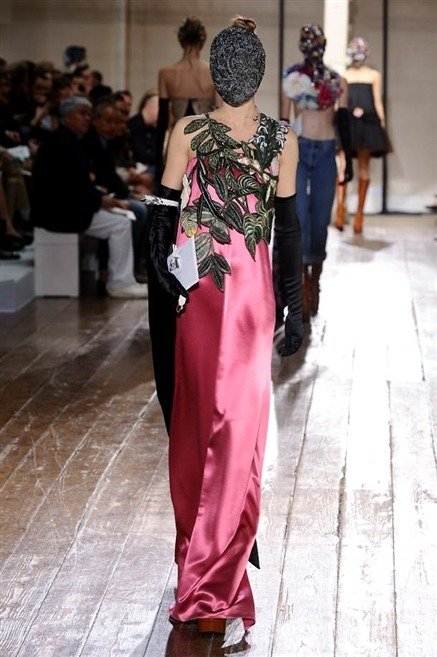
Susan Cianciolo, Milch, Karishma Shahani (Ka-Sha) and Maison Margiela has also designed collections that are made from found or recycled garments and textiles, giving the garment more character and ensuring each piece is unique (like the gorgeous pink dress made from embroidered vintage panels by Maison Margiela).

Brands that are making a similar work are also RE;CODE (Korean brand launched in 2012, specialized on upcycled fashion, they make clothes using a broad range of materials, like military fabrics, tents, uniforms, parachutes and used car airbags. They work with independent emerging designers giving them opportunities to promote their work. Usually the designs are produced in highly limited numbers-maximum of 6 in any style), REET AUS (dedicated to slow and ethical fashion, they developed an industrial method that enables the leftover materials back to production inside the same factory, making that each garment in their collection saves on average 75% water and 88% energy).


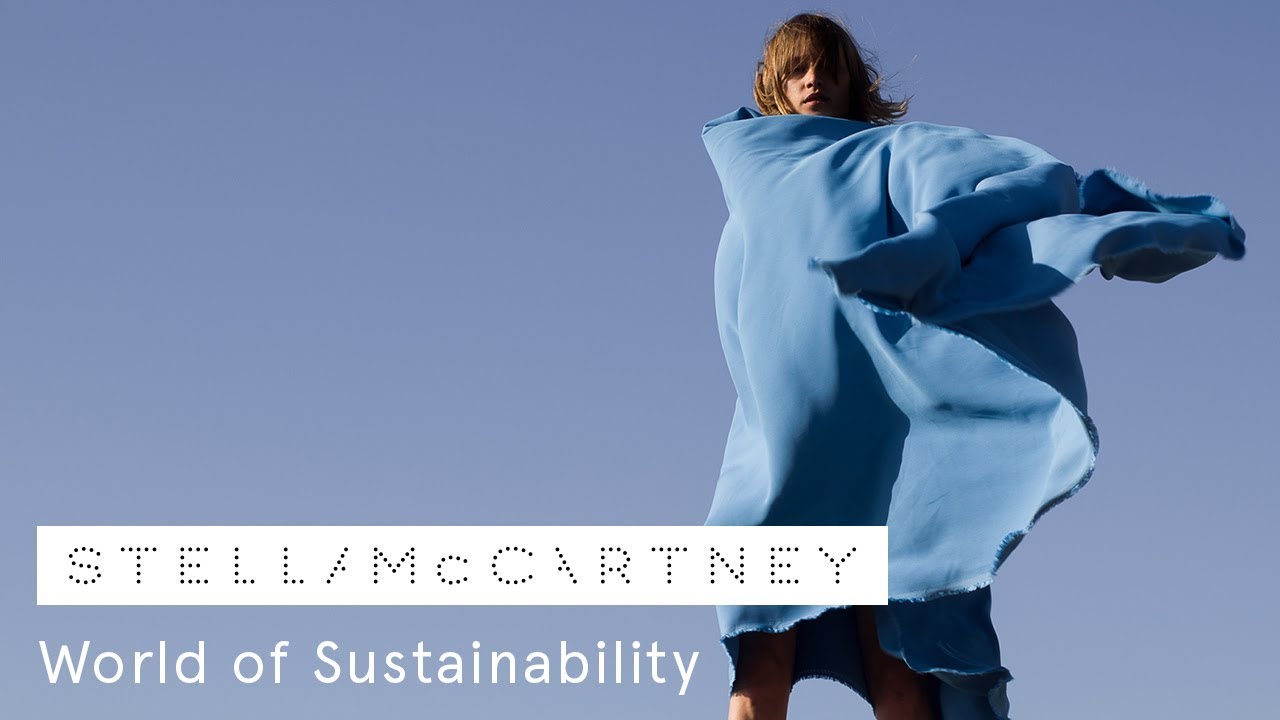
Researching new materials is also an important pillar in sustainable fashion, and the brand Stella McCartney is making outstanding work on this field, proving that it is possible to create luxury products without causing unnecessary harm to the planet. The brand never use real fur, they use faux fur instead (and due to the fact that the material non-biodegradable, it encourages customers to care for their garments and avoid throwing them away), they stopped using virgin cashmere and start using engineered cashmere made from post-factory cashmere waste and the leather used on their collections is vegetarian leather made from recycled polyester. Also, they use organic cotton (which is less harmful to the environment then the conventional one) and the wool used to make the garments is sourced from a small group of hand-selected farms that had achieved Gold-level Cradle to Cradle Certification. Another important step is the research on a new way of producing silk, the brand is working in partnership with biotechnology innovator company Bolt Threads, which is studying spiders DNA and the silk they make, creating a revolutionary method that makes less pollution and long-term sustainability.
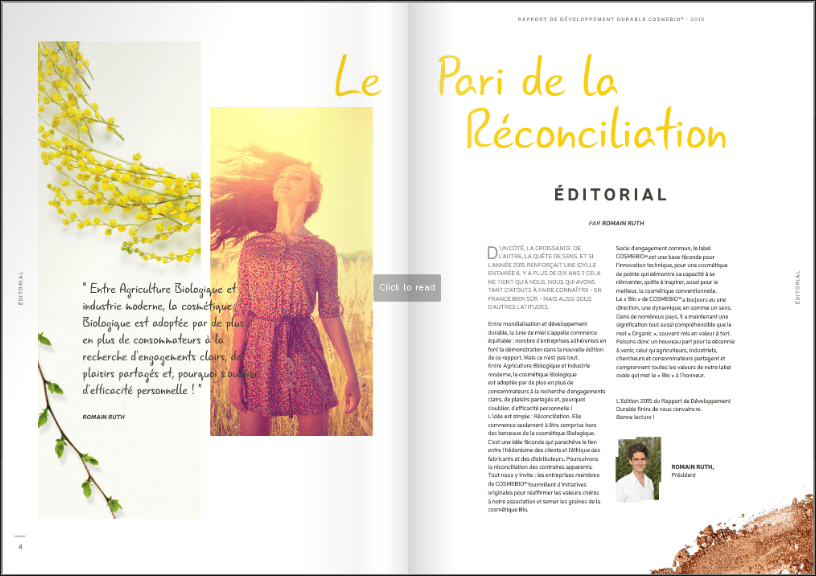
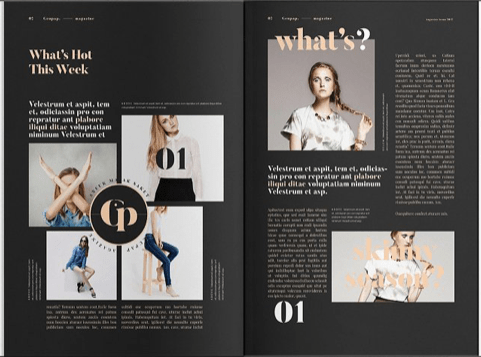
To decide how I wanted my editorial to look like, I researched some editorials and ended up creating an editorial that is the mix of the two editorials above.
I chose this two editorials because of their layouts; and one of them use a strong central image with a bold title which, in my opinion, captures the attention of the reader to the message they want to transmit; and the other has quite a few images and text which I think would allow me to give more information and details on the brands that use upcycling and research for new materials in order to create a sustainable fashion.

 Portfolio Development